African Art
2011 Egyptian revolution
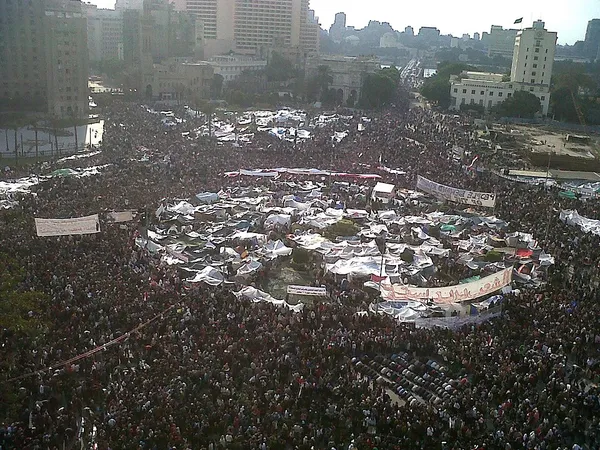
The 2011 Egyptian revolution, also known as the 25 January Revolution (Arabic: ثورة ٢٥ يناير, romanized: Thawrat khamsa wa-ʿišrūn yanāyir), began on 25 January 2011 and spread across Egypt. The date was set by various youth groups to coincide with National Police Day as a statement against increasing police brutality during the later years of Hosni Mubarak's presidency. It consisted of demonstrations, marches, occupations of plazas, non-violent civil resistance, acts of civil disobedience and strikes. Millions of protesters from a range of socio-economic and religious backgrounds demanded Mubarak's removal from the office of president of Egypt. Violent clashes between security forces and protesters resulted in at least 846 people killed and over 6,000 injured. Protesters retaliated by burning over 90 police stations across the country. The Egyptian protesters' grievances focused on legal and political issues, including police brutality, state-of-emergency laws, lack of political freedom, civil liberty, freedom of speech, corruption, high unemployment, food-price inflation and low wages. The protesters' primary demands were the end of the Mubarak regime. Strikes by labour unions added to the pressure on government officials. During the uprising, the capital, Cairo, was described as "a war zone" and the port city of Suez saw frequent violent clashes. Protesters defied a government-imposed curfew, which the police and military could not enforce in any case. Egypt's Central Security Forces, loyal to Mubarak, were gradually replaced by military troops. In the chaos, there was looting by rioters which was instigated (according to opposition sources) by plainclothes police officers. In response, watch groups were organised by civilian vigilantes to protect their neighborhoods. On 11 February 2011, Vice President Omar Suleiman announced that Mubarak resigned as president, turning power over to the Supreme Council of the Armed Forces (SCAF). The military junta, chaired by defense minister Muhammad Hussein Tantawy, announced on 13 February that the constitution was suspended, both houses of parliament dissolved and the military would govern for six months (until elections could be held).
Also on this shelf
1831.
1855.
See also
- ▸1498
- ▸105×617mmR
- ▸1533
Text from Wikipedia; plate via Wikimedia Commons. Text CC BY-SA 4.0; plate freely licensed (see Commons). Source record. Images and catalogue data are reproduced from open-access collections.