African Art
Islamic art
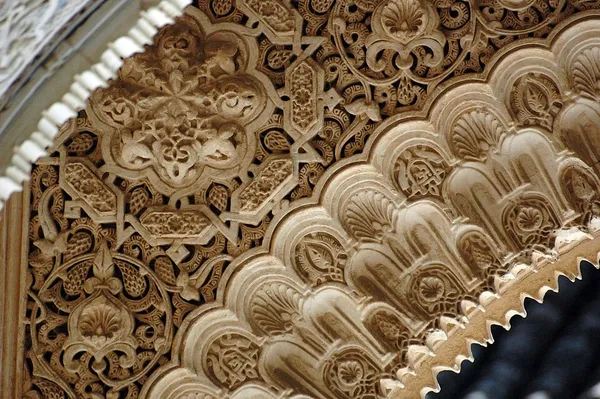
Islamic art is a part of Islamic culture and encompasses the visual arts produced since the 7th century CE by people who lived within territories inhabited or ruled by Muslim populations. Referring to characteristic traditions across a wide range of lands, periods, and genres, Islamic art is a concept used first by Western art historians in the late 19th century. Public Islamic art is traditionally non-representational, except for the widespread use of plant forms, usually in varieties of the spiralling arabesque. These are often combined with Islamic calligraphy, geometric patterns in styles that are typically found in a wide variety of media, from small objects in ceramic or metalwork to large decorative schemes in tiling on the outside and inside of large buildings, including mosques. Other forms of Islamic art include Islamic miniature painting, artefacts like Islamic glass or pottery, and textile arts, such as carpets and embroidery. The early developments of Islamic art were influenced by Roman art, Early Christian art (particularly Byzantine art), and Sassanian art, with later influences from Central Asian nomadic traditions. Chinese art had a significant influence on Islamic painting, pottery, and textiles. From its beginnings, Islamic art has been based on the written version of the Quran and other seminal religious works, which is reflected by the important role of calligraphy, representing the word as the medium of divine revelation. Religious Islamic art has been typically characterized by the absence of figures and extensive use of calligraphic, geometric and abstract floral patterns. Nevertheless, representations of human and animal forms historically flourished in nearly all Islamic cultures, although, partly because of opposing religious sentiments, living beings in paintings were often stylized, giving rise to a variety of decorative figural designs. Both religious and secular art objects often exhibit the same references, styles and forms. These include calligraphy, architecture, textiles and furnishings, such as carpets and woodwork. Secular arts and crafts include the production of textiles, such as clothing, carpets or tents, as well as household objects, made from metal, wood or other materials. Further, figurative miniature paintings have a rich tradition, especially in Persian, Mughal and Ottoman painting.
Also on this shelf
Bibliothèque nationale de France.
Christina, Queen of Sweden.
See also
Uncatalogued shelfText from Wikipedia; plate via Wikimedia Commons. Text CC BY-SA 4.0; plate freely licensed (see Commons). Source record. Images and catalogue data are reproduced from open-access collections.