African Art
Benin Bronzes
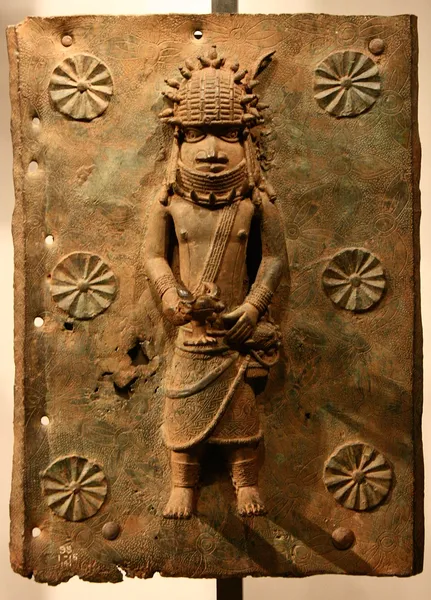
The Benin Bronzes are a group of several thousand metal plaques and sculptures that decorated the royal palace of the Kingdom of Benin, in what is now Edo State, Nigeria. The metal plaques were produced by the Guild of Benin Bronze Casters, now located in Igun Street, also known as Igun-Eronmwon Quarters. Collectively, the objects form the best examples of Benin art and were created from the fourteenth century by artists of the Edo people. The plaques, which in the Edo language are called Ama, depict scenes or represent themes in the history of the kingdom. Apart from the plaques, other sculptures in brass or bronze include portrait heads, jewellery, and smaller pieces. Some of the dramatic sculptures date to the fourteenth century, but the bulk of the collection dates to the fifteenth and sixteenth centuries. It is believed that two "Golden Ages" in Benin metal workmanship occurred during the reigns of Esigie (fl. 1550) and of Eresoyen (1735–1750), when their workmanship achieved its highest quality. Most of the plaques and other objects were taken by British forces during the Benin Expedition of 1897 as the British Empire's control was being consolidated in Southern Nigeria. This expedition was positioned by British sources as retaliation for a massacre of an unarmed party of British envoys and a large number of their African bearers in January 1897. Some contemporary scholars, such as Dan Hicks, argue that the expedition was part of a broader series of premeditated attacks, framed as retaliatory or punitive, to further European imperialistic and economic interests in Africa. Following the expedition, two hundred pieces were taken to the British Museum in London, while the rest were taken to other European museums. A large number are held by the British Museum, with other notable collections in Germany and the United States. Late 19th-century scholars O. M. Dalton and Charles Hercules Read erroneously concluded that Benin knowledge of metallurgy came from the Portuguese traders, who were in contact with Benin in the early modern period. The Kingdom of Benin was a hub of African civilization long before Portuguese traders visited, and bronzes were made in Benin prior to the arrival of the Portuguese.
Also on this shelf
1209.
Coptic binding.
See also
Uncatalogued shelfText from Wikipedia; plate via Wikimedia Commons. Text CC BY-SA 4.0; plate freely licensed (see Commons). Source record. Images and catalogue data are reproduced from open-access collections.