African Art
History of Ohio
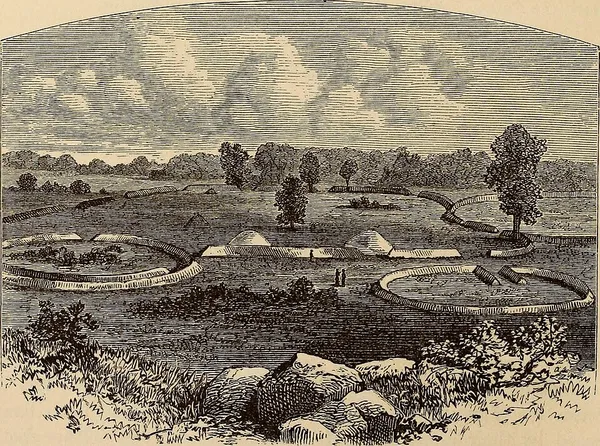
The history of Ohio as a state began when the Northwest Territory was divided in 1800, and the remainder reorganized for admission to the union on March 1, 1803, as the 17th state of the United States. The recorded history of Ohio began in the late 17th century when French explorers from Canada reached the Ohio River, from which the "Ohio Country" took its name, a river the Iroquois called O-y-o, "great river". Before that, Native Americans speaking Algonquin languages had inhabited Ohio and the central midwestern United States for hundreds of years, until displaced by the Iroquois in the latter part of the 17th century. Other cultures not generally identified as "Indians", including the Hopewell "mound builders", preceded them. Human history in Ohio began a few millennia after formation of the Bering land bridge about 14,500 BCE – see Prehistory of Ohio. By the mid-18th century, a few American and French fur traders engaged historic Native American tribes in present-day Ohio in the fur trade. The Native Americans had their own extensive trading networks across the continent before the Europeans arrived. American settlement in the Ohio Country came after the American Revolutionary War and the formation of the United States, with its takeover of former British Canadian territory. Congress prohibited slavery in the Northwest Territory which presaged Ohio and the five states of the Territory entering the Union as free states. Ohio's population increased rapidly after United States victory in the Northwest Indian Wars brought peace to the Ohio frontier. On March 1, 1803, Ohio was admitted to the union as the 17th state. Settlement of Ohio was chiefly by migrants from New England, New York and Pennsylvania. Southerners settled along the southern part of the territory, arriving by travel along the Ohio River from the Upper South. Yankees, especially in the "Western reserve" (near Cleveland), supported modernization, public education, and anti-slavery policies. The state supported the Union in the American Civil War, although antiwar Copperhead sentiment was strong in southern settlement areas. After the Civil War, Ohio developed as a major industrial state. Ships traveled the Great Lakes to deliver iron ore and other products from western areas. This was also a route for exports, as were the railroads.
Also on this shelf
Armenian Apostolic Church.
1677.
See also
Uncatalogued shelfText from Wikipedia; plate via Wikimedia Commons. Text CC BY-SA 4.0; plate freely licensed (see Commons). Source record. Images and catalogue data are reproduced from open-access collections.