African Art
Berber traditional religion
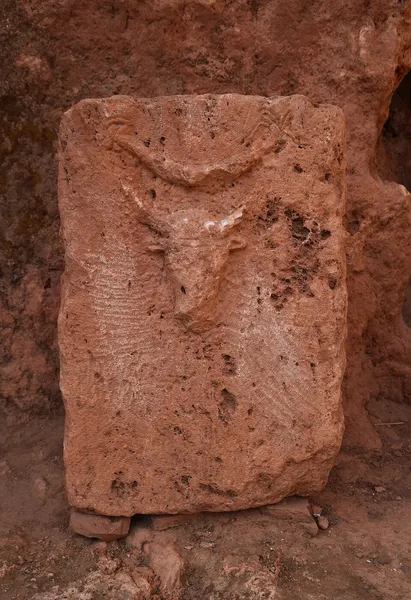
The traditional Berber religion (also called Libyco-Berber religion or Amazigh religion, or Numidian religion) were various sets of beliefs and deities adhered to by Berbers (or Amazighs), and possibly other groups within Northwest Africa. They have themselves influenced and are somewhat influenced by the beliefs of the other peoples of the mediterranean including but not limited to: ancient Egyptians, Punics, Greeks, and Romans. In areas of the Maghreb in which agriculture could be practiced, rain and water sources played important parts within local belief systems. Worship of spirits living in caverns and grottos was common. For example worship of the fertility goddess related to caverns, Ifru (Africa), was widespread in coastal Algeria. In other, more pastoral areas such as Libya, worship of the sun and moon were common, though these were also present in areas such as Morocco and Algeria. Berber groups across the region also practiced ancestor worship. The Christianization of Rome pushed animistic and polytheistic Berber beliefs out of urban areas, though total evangelization failed, and after the Arab conquest of the Maghreb, the traditional Berber religion and local Christianity gradually disappeared. Elements of the ancient Berber beliefs still exist today subtly within the Berber popular culture and tradition.
Also on this shelf
Great Lawn and Turtle Pond.
Chicken.
See also
Uncatalogued shelfText from Wikipedia; plate via Wikimedia Commons. Text CC BY-SA 4.0; plate freely licensed (see Commons). Source record. Images and catalogue data are reproduced from open-access collections.