African Art
Afro–Puerto Ricans
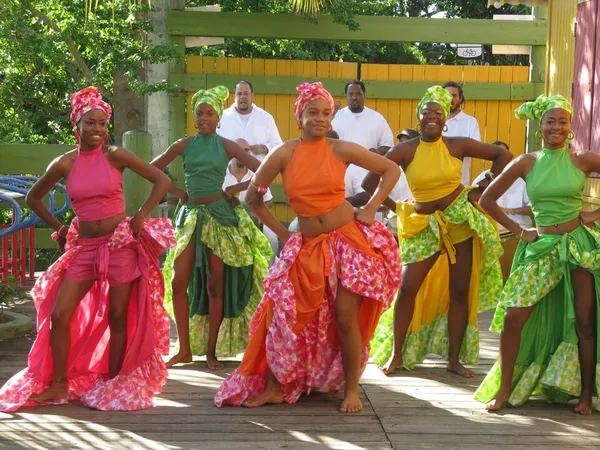
Afro–Puerto Ricans (Spanish: Afropuertorriqueños), most commonly known as Afroboricuas, but also occasionally referred to as Afroborinqueños, Afroborincanos, or Afropuertorros, are Puerto Ricans of full or partial sub-Saharan African origin, who are predominately the descendants of slaves, freedmen, and free Blacks original to West and Central Africa. The term Afro–Puerto Rican is also used to refer to historical or cultural elements in Puerto Rican society associated with this community, including music, language, cuisine, art, and religion. The history of Afro–Puerto Ricans traces its origins to the arrival of free West African Black men, or libertos (freedmen), who accompanied Spanish Conquistador Juan Ponce de León at the start of the colonization of the island of Puerto Rico. Upon landing and settling, the Spaniards enslaved and exploited the Indigenous Taínos to work in the extraction of gold. When the Taíno forced laborers were exterminated primarily due to Old World infectious diseases, the Spanish Crown began to rely on sub-Saharan African slavery emanating from different ethnic groups within West and Central Africa to staff their mining, plantations, and constructions. While there was slavery in Puerto Rico, the island received less Black slaves than other Spanish and non-Spanish colonies in the Americas. The need for direct enslaved labor brought through the Atlantic slave trade was greatly reduced by the depletion of gold in Puerto Rico in the 16th century, and the island began to serve primarily as a strategic and military outpost to support, protect, and defend trade routes of Spanish ships traveling between Spain and territories within the continental Americas. However, the Spanish, hoping to destabilize the neighboring colonies of competing world powers, encouraged enslaved fugitives and free people of color from other European colonies in the Caribbean to emigrate to Puerto Rico. As a result, significant numbers of Black people emigrted to Puerto Rico from neighboring British, Danish, Dutch, and French colonies in the Caribbean. In the 19th century, slavery in Puerto Rico was increased, as the Spanish, facing economic decline with the loss of all of its colonial territories in the Americas aside from Cuba and Puerto Rico, established and expanded sugar cane production in the island.
Also on this shelf
Hulme Hippodrome.
1522.
See also
- ▸377
- ▸German art
- ▸Goma
Text from Wikipedia; plate via Wikimedia Commons. Text CC BY-SA 4.0; plate freely licensed (see Commons). Source record. Images and catalogue data are reproduced from open-access collections.