African Art
Greece
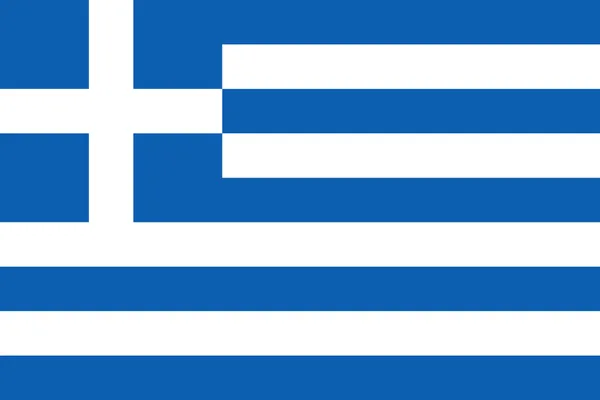
Greece, officially the Hellenic Republic, is a country located mostly on the Balkan peninsula of Southeastern Europe, with thousands of islands extending geographically to Asia Minor. It has a population of around 10 million. With nine regions and up to 227 inhabited islands, it has the longest coastline on the Mediterranean. The Ionian Sea is west of the mainland, Albania northwest, and North Macedonia and Bulgaria north. Turkey is east both by land and the Aegean Sea. The capital, Athens, is the largest Greek city, followed by Thessaloniki and Patras. At the crossroads of Europe, Asia and Africa, Greece is often considered the cradle of Western civilisation, Western philosophy, and Western literature, but also had a profound influence on the Eastern world, including on Egypt, Iran, Anatolia, India and later on the Islamic world. Through the Ancient Greeks, Greece is the birthplace of democracy, historiography, political science, major scientific and mathematical principles, theatre, and the Olympic Games. The Ancient Greeks were organised into independent city-states, or poleis (singular polis), that spanned the Mediterranean and Black seas. Philip II of Macedon united most of present-day Greece in the fourth century BC, with his son Alexander the Great conquering much of the known ancient world from the Near East to northwestern India. The subsequent Hellenistic period saw the height of Greek culture and influence in antiquity. Greece was annexed by Rome in the second century BC and became an integral part of the Roman Empire and its continuation, the Byzantine Empire, where Greek culture and language were dominant. The Greek Orthodox Church helped shape modern Greek identity and transmitted Greek traditions to the wider Orthodox world. After the Fourth Crusade in 1204, Greece and the rest of the Byzantine empire were fragmented into several Latin and Byzantine successor polities, with most Greek lands finally coming under Ottoman control by the mid-15th century. Following a protracted war of independence in 1821, Greece emerged as a modern nation state in 1830, but was challenged by most Greeks living outside its borders. The Kingdom of Greece pursued territorial expansion during the Balkan Wars (1912–1913) and World War I (1914–1918), until its defeat in the Greco-Turkish War in 1922.
Also on this shelf
Bruce Onobrakpeya.
1920.
See also
Uncatalogued shelfText from Wikipedia; plate via Wikimedia Commons. Text CC BY-SA 4.0; plate freely licensed (see Commons). Source record. Images and catalogue data are reproduced from open-access collections.