African Art
Fortification
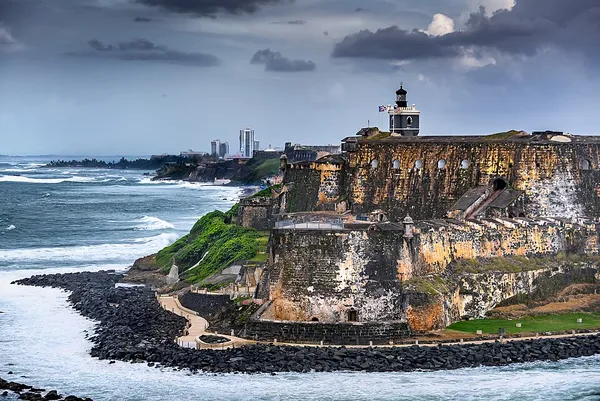
A fortification (also called a fort, fortress, fastness, or stronghold) is a military construction designed for the defense of territories in warfare, and is used to establish rule in a region during peacetime. The term is derived from Latin fortis ("strong") and facere ("to make"). From very early history to modern times, defensive walls have often been necessary for cities to survive in an ever-changing world of invasion and conquest. Some settlements in the Indus Valley Civilization were the first small cities to be fortified. In ancient Greece, large cyclopean stone walls fitted without mortar had been built in Mycenaean Greece, such as the ancient site of Mycenae. A Greek phrourion was a fortified collection of buildings used as a military garrison, and is the equivalent of the Roman castellum or fortress. These constructions mainly served the purpose of a watch tower, to guard certain roads, passes, and borders. Though smaller than a real fortress, they acted as a border guard rather than a real strongpoint to watch and maintain the border. The art of setting out a military camp or constructing a fortification traditionally has been called "castrametation" since the time of the Roman legions. Fortification is usually divided into two branches: permanent fortification and field fortification. There is also an intermediate branch known as semipermanent fortification. Castles are fortifications which are regarded as being distinct from the generic fort or fortress in that they are a residence of a monarch or noble and command a specific defensive territory. Roman forts and hill forts were the main antecedents of castles in Europe, which emerged in the 9th century in the Carolingian Empire. The Early Middle Ages saw the creation of some towns built around castles. Medieval-style fortifications were largely made obsolete by the arrival of cannons in the 14th century. Fortifications in the age of black powder evolved into much lower structures with greater use of ditches and earth ramparts that would absorb and disperse the energy of cannon fire. Walls exposed to direct cannon fire were very vulnerable, so the walls were sunk into ditches fronted by earth slopes to improve protection. The arrival of explosive shells in the 19th century led to another stage in the evolution of fortification.
Also on this shelf
1858.
Medieval art.
See also
Uncatalogued shelfText from Wikipedia; plate via Wikimedia Commons. Text CC BY-SA 4.0; plate freely licensed (see Commons). Source record. Images and catalogue data are reproduced from open-access collections.